
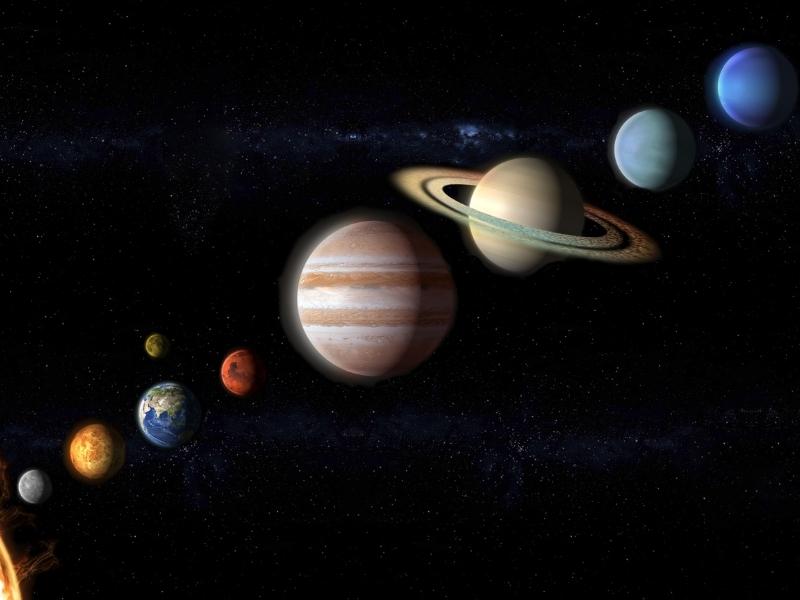
1. The Sun Holds Almost All the Mass
The Sun contains about 99.8% of the total mass of the entire solar system, making it the dominant gravitational force.
2. The Solar System Is About 4.6 Billion Years Old
Scientists estimate its age by studying meteorites, some of the oldest objects ever discovered.
3. Jupiter Is the Largest Planet
Jupiter is so massive that all the other planets could fit inside it, with room to spare.
4. Venus Is Hotter Than Mercury
Despite being farther from the Sun, Venus has a thick atmosphere that traps heat, making it the hottest planet.
5. Saturn Could Float in Water (Theoretically)
Saturn’s density is so low that, if a large enough ocean existed, it would float.
6. Uranus Rotates on Its Side
Uranus is tilted at about 98 degrees, causing extreme seasons that last over 20 years each.
7. Mars Has the Tallest Volcano
Olympus Mons on Mars is nearly three times taller than Mount Everest, making it the tallest volcano in the solar system.
8. The Asteroid Belt Is Mostly Empty Space
Although it looks crowded in images, asteroids are spread so far apart that collisions are rare.
9. Neptune Has the Fastest Winds
Wind speeds on Neptune can exceed 2,000 km/h (1,200 mph), faster than the speed of sound on Earth.
10. The Solar System Has More Than 200 Moons
Planets like Jupiter and Saturn have dozens of moons, many with oceans, volcanoes, or icy surfaces.

Leave a comment
Your email address will not be published. Required fields are marked *